

The Generous Subject
What photographing a rodeo—and my audience's reaction to it—taught me about finding pictures.

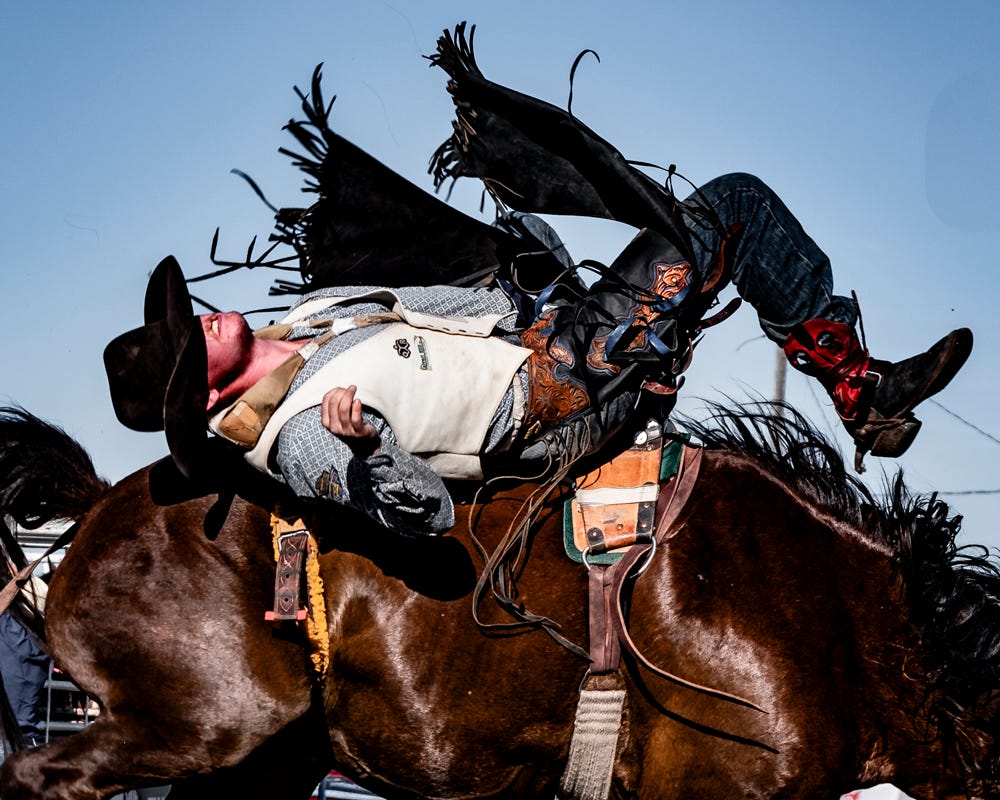
I came away from photographing the rodeo this year with two surprises.
The first was that I enjoyed it more than I expected. I'd been photographing rodeos, off and on, for nearly fifteen years, trying a variety of visual approaches along the way. After spending the last few attempting to apply my street aesthetic to these annual visits, I arrived this year with a simpler, perhaps lazier, plan: embrace the action and photograph the rodeo as a sporting event.
The second surprise was the digital public reaction the photographs received afterwards.
After making the decision to shoot with a straight-up sports photographer’s frame of mind, the first surprise is easy enough to explain. Rodeo is a visually rich environment. Competitors wear clothing that photographs well. Horses are magnificent creatures. There is dust, strong sunlight, dramatic shadows, movement, tension, and genuine risk. The participants care deeply about what they are doing, and that commitment shows up in the pictures.
In photographic terms, the rodeo is generous. Everything seems to want to be photographed.
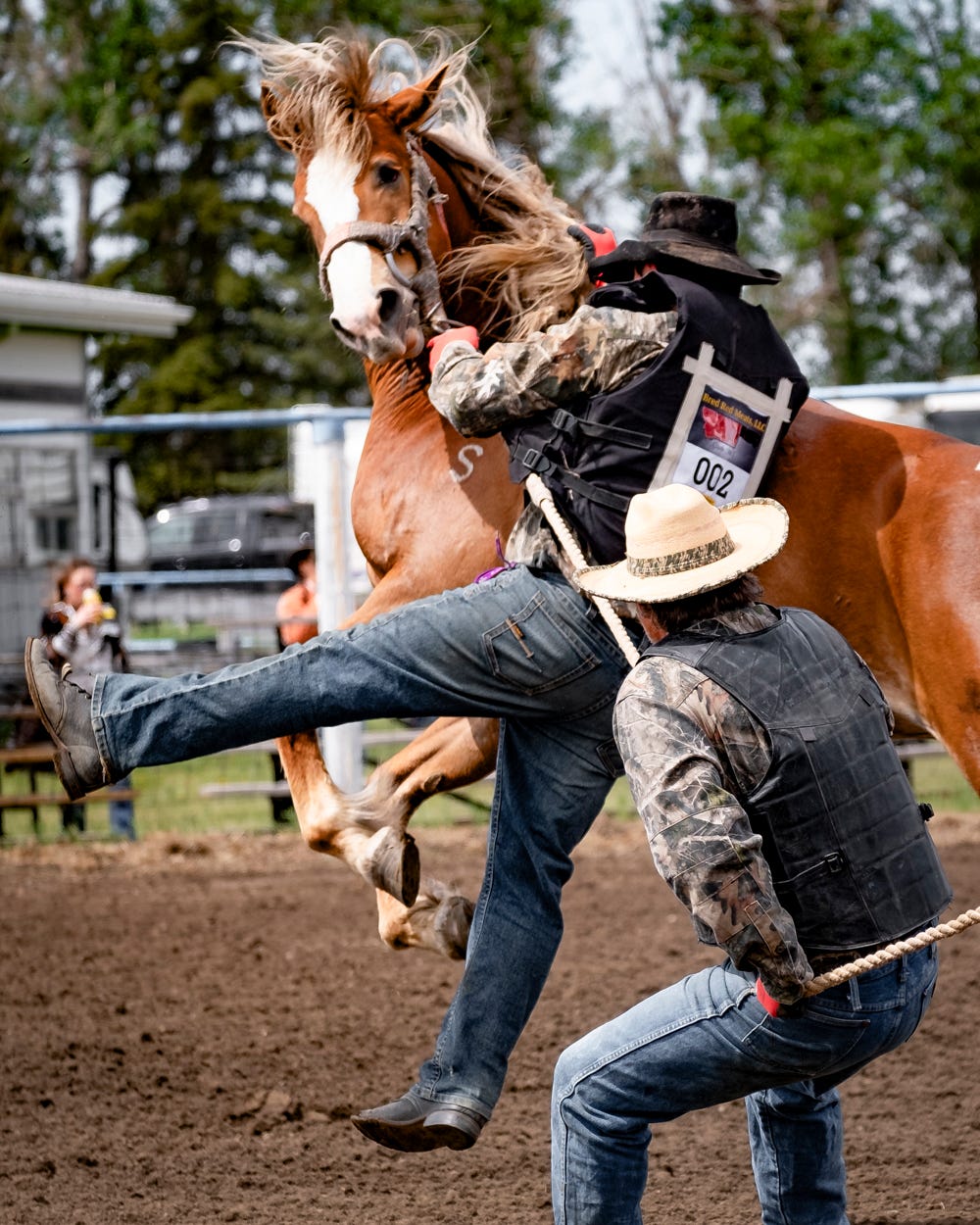
My fear, if you want to call it that, is that if I shoot like a sports photographer, my images will look like every other rodeo photographer’s. I’m not dissing them. They do great work, and they have eager customers and media outlets that buy it. I don’t want to compete with them, and I also don’t want to find myself making artistic choices that feel driven by an imagined customer or editor.
A photographer arriving at a rodeo for the first time quickly discovers that there are opportunities everywhere. A rider adjusts his hat before entering the arena. A gelding paws at the ground or sidles into position before the steer he will soon pursue is released. Family members watch the action closely from behind a fence. Competitors prepare, celebrate, and sometimes recover from failure. Even between events there is visual interest.
Contrast this with a typical afternoon walking city streets with a camera.
On the face of it, the street owes the photographer nothing.
Most days on the street, very little of obvious significance happens. My subjects are simply moving from one obligation to another. The light may be less than ideal. The backgrounds cluttered. The gestures insignificant. A photographer can walk for hours and not encounter a moment worth preserving.
And I love it.
I have a flow state pretty much tailored to probe those spaces, looking for juxtapositions and implied meaning. My brain buzzes as I dig for scenarios and details while working the street.
But I would have to concede that street photography is often an exercise in searching for significance where none appears to exist. Finding it, or fabricating it, is the point.
The rodeo, by comparison, arrives already carrying significance.
Putting my sports photographer hat on (actually, it's more like a senior citizen's sun hat), I realized that my role shifted more toward selection than discovery. Instead of probing a scene for relationships, gestures, and meaning, I was trying to keep a powerful, dramatic subject in the viewfinder while making split-second decisions about when to release the shutter.
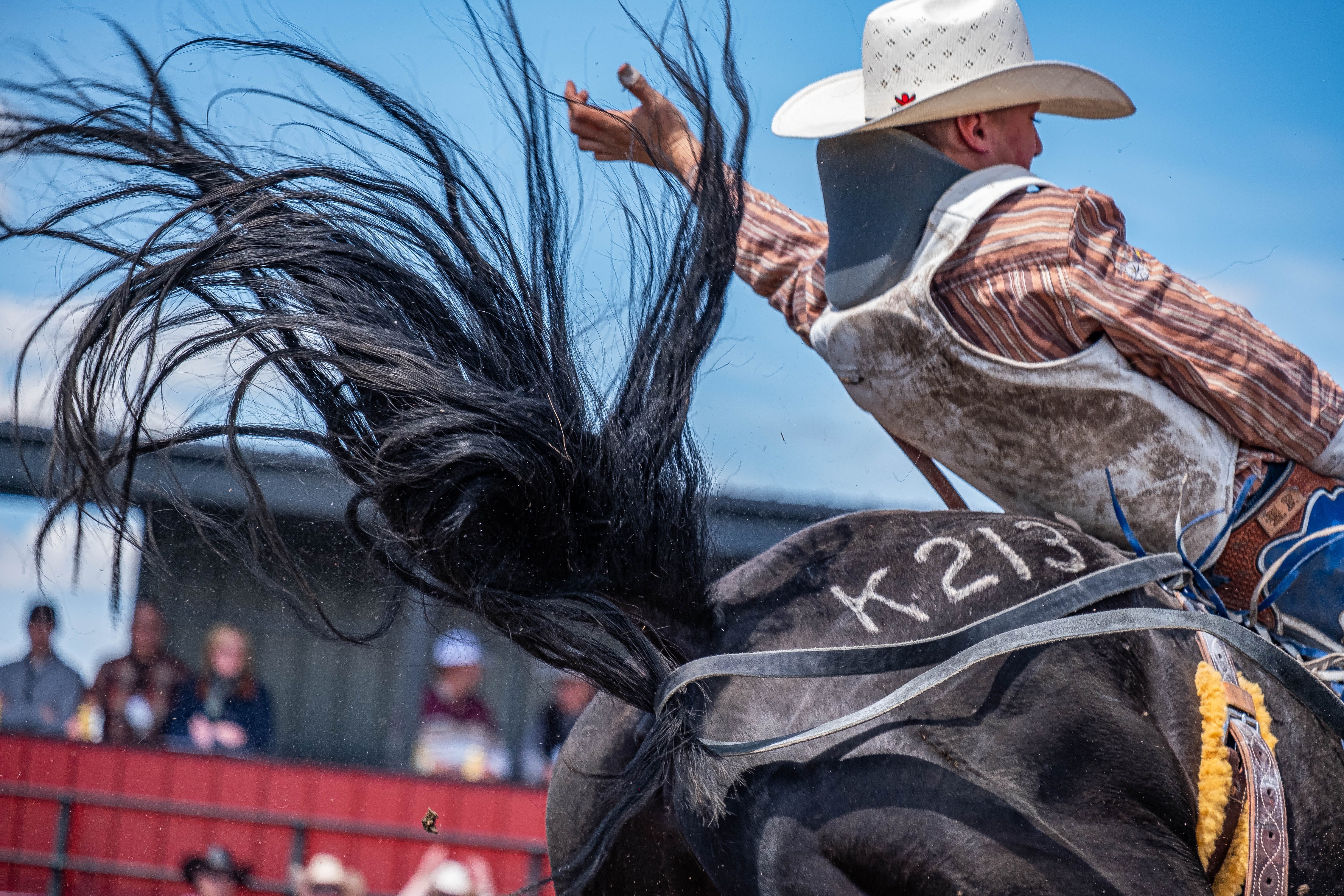
Rodeo work presents moments more readily. The street asks the photographer to go looking for them.
That realization led me to an uncomfortable conclusion. While rodeo photography is undoubtedly demanding in certain ways, I found myself working harder on anticipation than interpretation.
Let me expand on that idea.
When photographing a rodeo, I know where the action will occur. I know approximately when it will occur. I know who the principal actors are. I know that the crowd’s attention will be directed toward the same place my lens is pointed.
Even when events unfold unpredictably, they unfold within a predictable framework.
My Fujifilm cameras, even with their less-than-ideal autofocus systems, have made much of the technical challenge relatively manageable. Years of watching these competitions at least gave me some sense of what was likely to happen next. I could position myself, simplify backgrounds, and wait for stronger combinations of subject and gesture. My concern wasn't whether the action would happen. It was how to photograph it without producing something that looked like some lame tourism brochure.
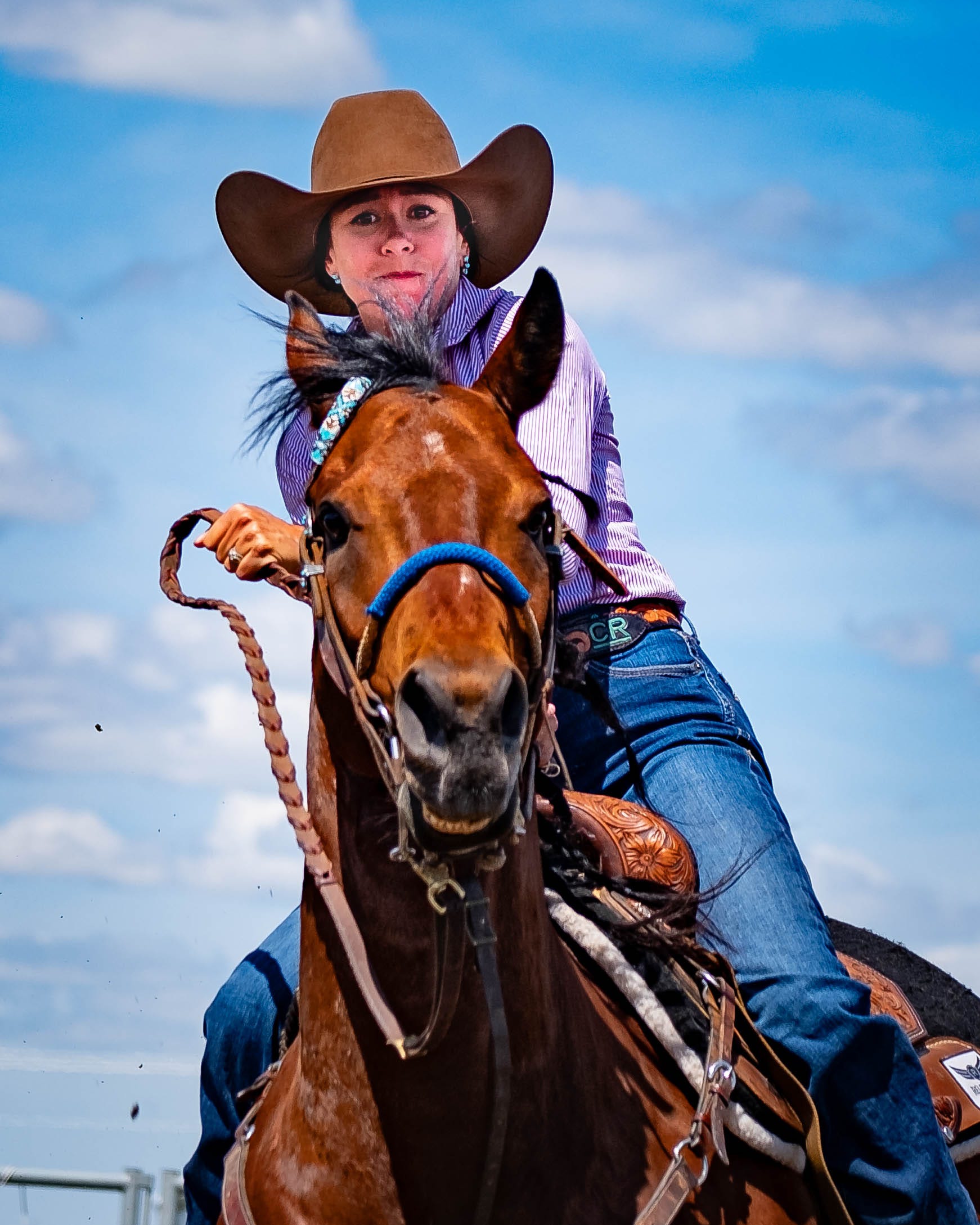
Rodeo photographs are immediately understandable. A viewer does not need help decoding a bucking horse, a determined rider, or an athlete competing against significant odds. The story and the drama are obvious.
Many of my favourite street photographs work differently. They reveal themselves slowly. They ask more from the viewer. Their subject is not danger or spectacle but observation. They are less concerned with what happened than with what it felt like to be there.
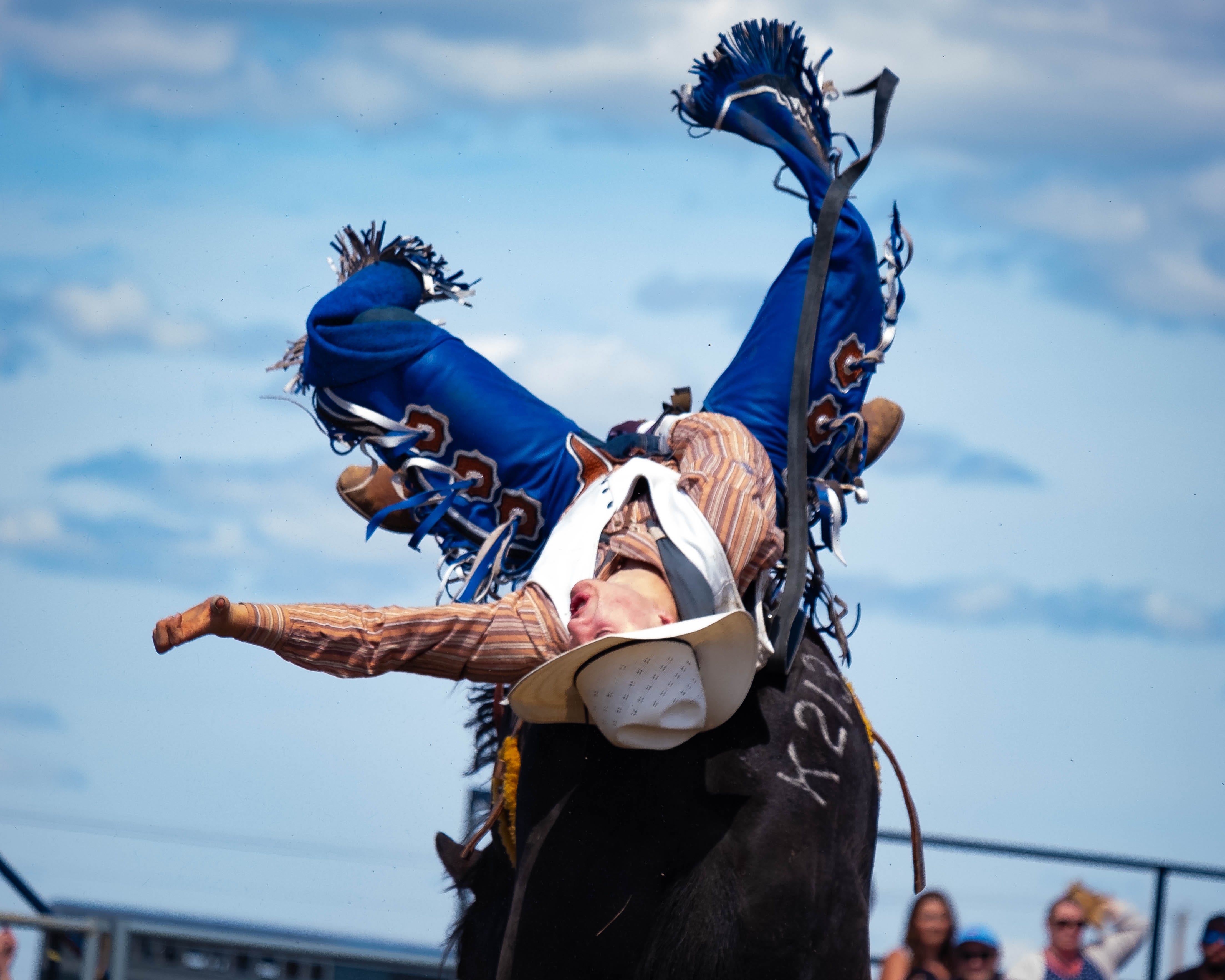
This is where the second surprise crept in.
When I posted the photographs online, the response was unlike anything I’d experienced before. Tens of thousands of people viewed them. Hundreds reacted and commented. The engagement dwarfed what my photographs normally receive. I was grateful, of course. But I was also mystified.
I liked the photographs. Some of them quite a lot. But they didn’t feel especially mine. They looked like competent rodeo photographs. They demonstrated that I could anticipate the action, keep up with the pace, and bring home a respectable set of images. But I wasn’t so convinced they revealed much about me as a photographer.
Perhaps that’s precisely why they resonated.
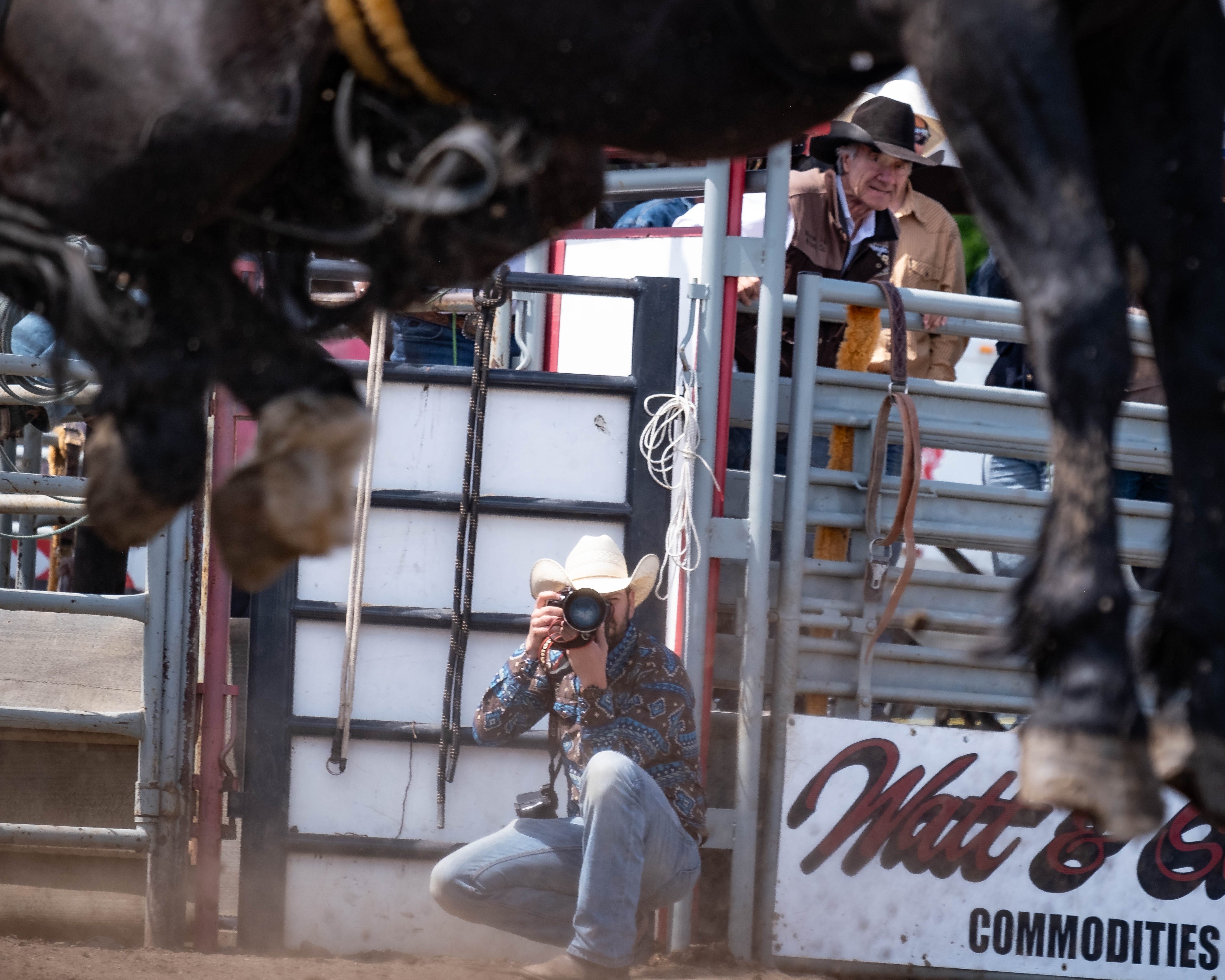
Viewers don’t ask whether the pictures reflect a personal style. They were responding to the horse, the rider, the dust, the danger, the split-second drama. They weren’t evaluating my interpretation of the event. They were simply enjoying the event through the photographs.
That realization surprised me almost as much as making the photographs themselves.
It also made me realize that spending those few days photographing the rodeo—and seeing the unexpectedly enthusiastic response the photographs received afterwards—taught me less about rodeos than it did about photography. More specifically, it taught me something about the difference between discovering photographs and recognizing photographic opportunities.
Both are worthwhile pursuits but they are not the same thing.
Perhaps I knew that already. It just took a change in mindset to see it clearly.
-Ward, Calgary
Is there a sporting event in your neighbourhood or a family sporting activity that you'd like to photograph? It can be both worthwhile and enjoyable. Subjects like these offer a different way of finding pictures than the slow search for meaning that many of us enjoy on the street. Have you ever found yourself photographing something completely outside your usual comfort zone? I'd be interested to hear how it went.
Antonio and I discussed this work in our Street Shots Photography Podcast episode called Not His Last Rodeo. If you'd like to see more of this work, I maintain a rodeo gallery on my website. The lead image from this article is available as a fine-art print, and I'd be happy to arrange a print of any of the photographs in my galleries.
Great piece! I think we've all had occasions where the subject matter at hand doesn't completely match our overall sensibilities, but we give it a try nevertheless and, like you were this time, are sometimes surprised by the results. I like to think of it as trying a new recipe that I'm not familiar with - sometimes the magic doesn't work out, but when it does, you start to think, "well... how can I do *that* again?"
I think I get, too, how the images resonated with a larger audience - they are raw, real and have none of the (lovely) subtlety of your street images. A cowboy flying across the frame, about to hit the hard dirt has an immediacy that hits home.