

Stampede Project Revisited
When Curiosity Outgrows the Frame

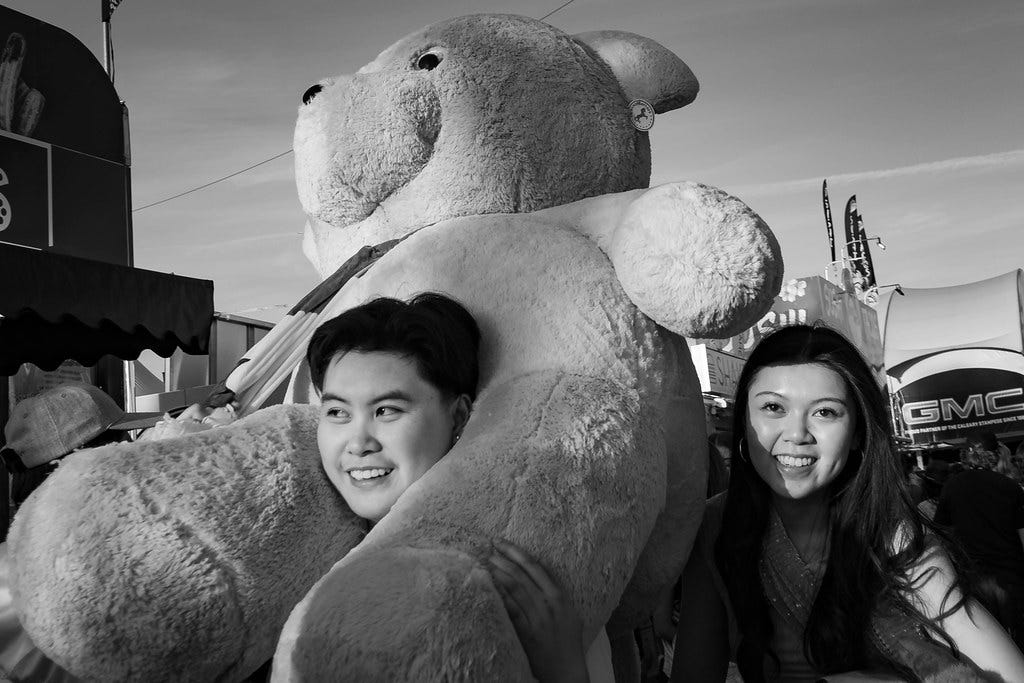
In my previous post, I wrote about photographing the Hand Hills Lake and Stavely rodeos and noted how changing my expectations affected the work I brought home. For years I had approached photographing rodeo hoping to bend it toward my own visual interests. This year I simply allowed rodeo to be a sporting event and discovered that, in doing so, I enjoyed both the photography and the experience more than I had expected.
In some ways, that same idea stayed with me as I returned to this year's Calgary Stampede midway.
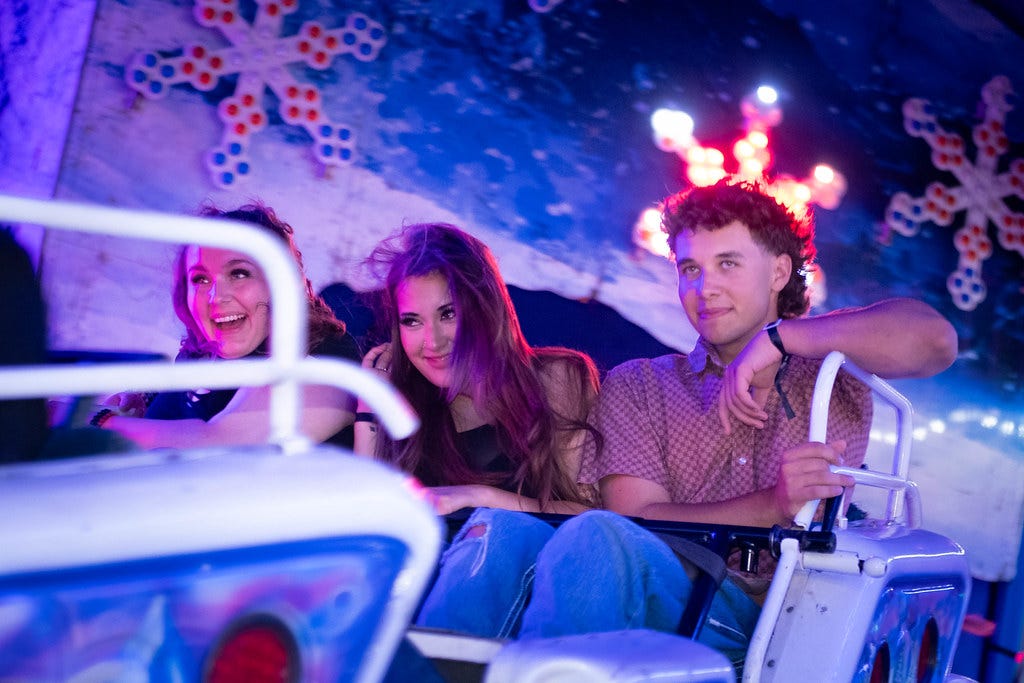
I’ve been photographing the midway with creative intent for over ten years, and although every summer brings new rides, new attractions and a new crowd, it has always felt familiar. It is a place that rewards patience. There is an endless supply of gestures, fleeting expressions and unexpected alignments. As a people-oriented street photographer, I found myself drawn to those moments when often unrelated subjects briefly arranged themselves into something visually satisfying. The photographs were built around relationships within the frame. Their purpose was largely formal.
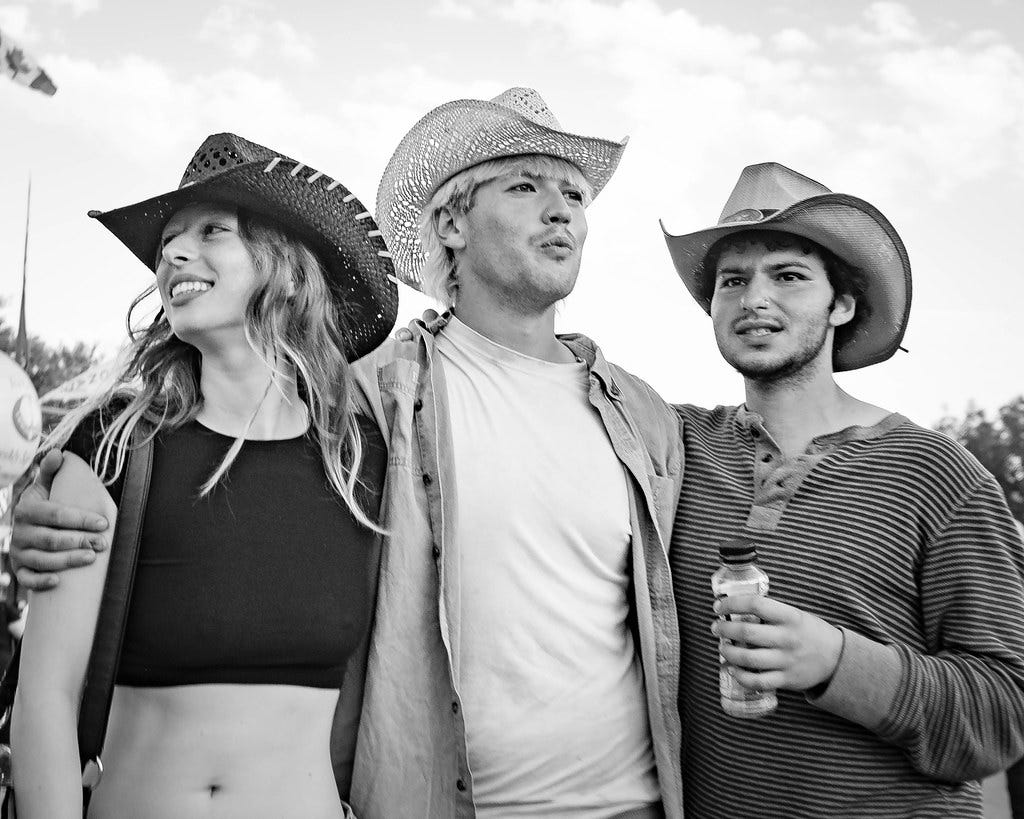
There is nothing wrong with that approach. Those pictures remain an honest record of where I was and am as a photographer, and many are still favourites.
This year my attention began to shift.
I was still looking for layers, gestures, balance and those brief moments when people came together in the frame. Those instincts hadn't changed. But I also began looking for opportunities to render my subjects with a little more depth - perhaps a suggestion of their lives beyond the photograph.
This is a subtle distinction, but for me it is an important one.
As I edited this year's images, I made efforts to select photographs where composition and human behaviour seemed to reinforce one another. A father carrying his daughter through the crowd. Teenagers moving together through the midway with no apparent destination beyond simply being together. Friends sharing food that had become less about eating than participating in a summer ritual. Families clustered around a game booth, where winning the oversized stuffed animal seemed almost secondary to the shared experience of trying.
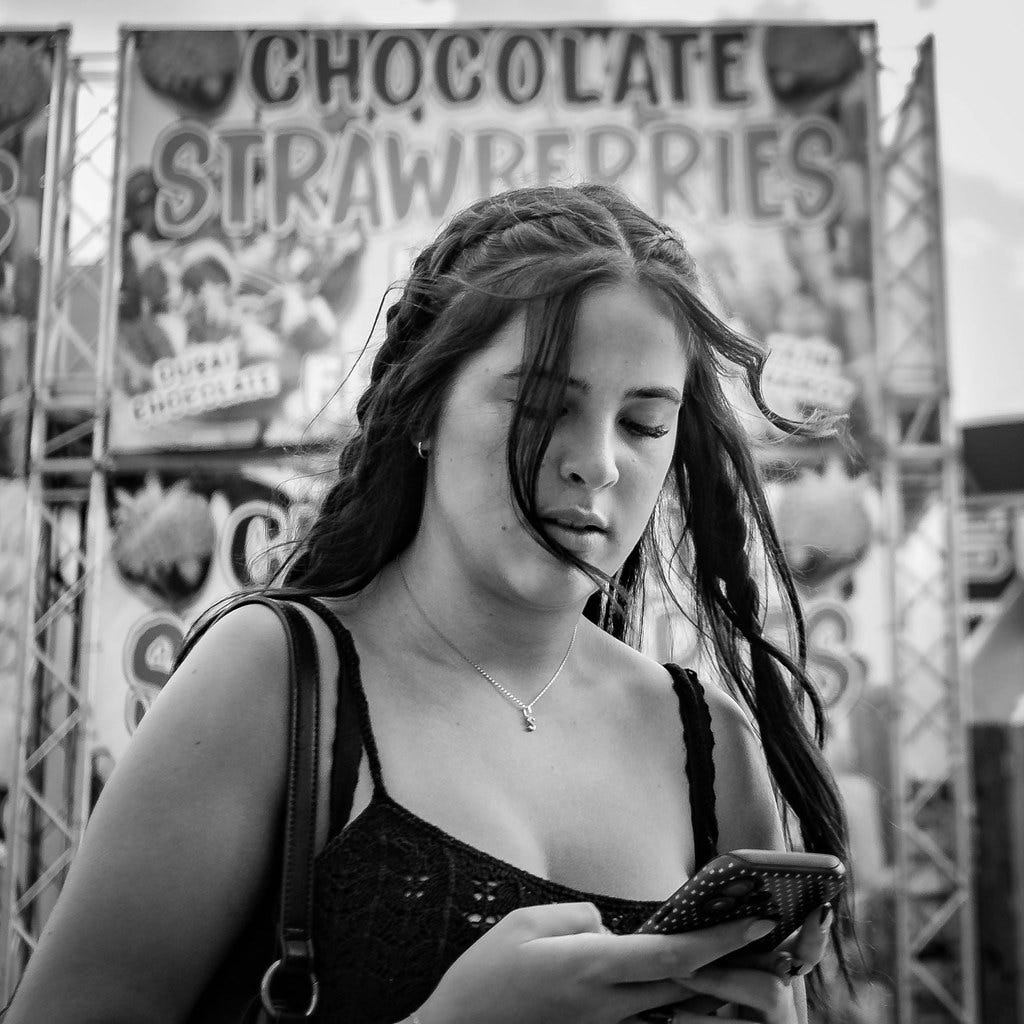
Composition still matters every bit as much to me. It's what catches my eye first. What is changing is that I'm finding more satisfaction when the photograph also hints at something beyond the arrangement of people within the frame.
I’ve begun to think that’s the real challenge of photographing one’s own community.
When I photographed in Japan, I consciously worked within the tradition of Japanese street photography, paying homage to its visual language. Those images contain a certain distance and tension because they are made from the perspective of an outsider trying to understand a place that isn’t his own.
That may be inevitable. It’s one thing to photograph another culture in the street. It’s quite another to photograph your own.
The midway presents an entirely different challenge. There is no distance to construct. This is my city, my country and my culture. The task isn’t to discover what is unfamiliar, but to look carefully enough that the familiar begins to reveal something deeper.
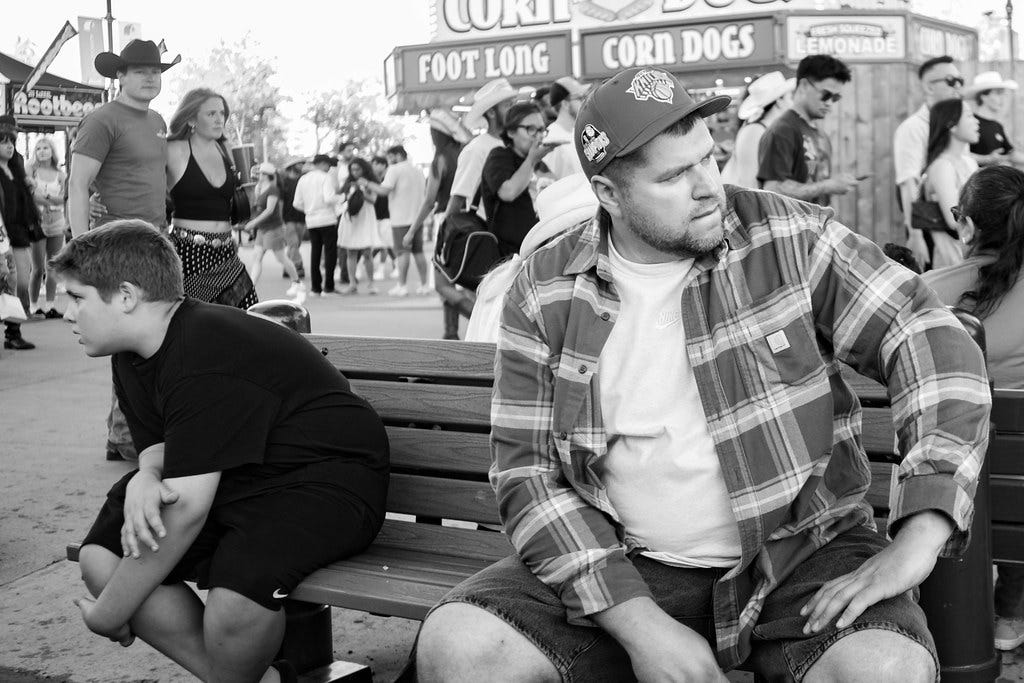
It’s more difficult than it sounds.
The Stampede is so much a part of life in Calgary that it’s easy to photograph only its surface. Cowboy hats, midway rides, food stands and crowds are all obvious subjects, but they are also the easiest ones to see. Returning year after year has gradually shifted my attention away from those visual markers and toward the behaviours that give them meaning. The photographs have become less concerned with describing what the Stampede looks like and more interested in how people inhabit it.
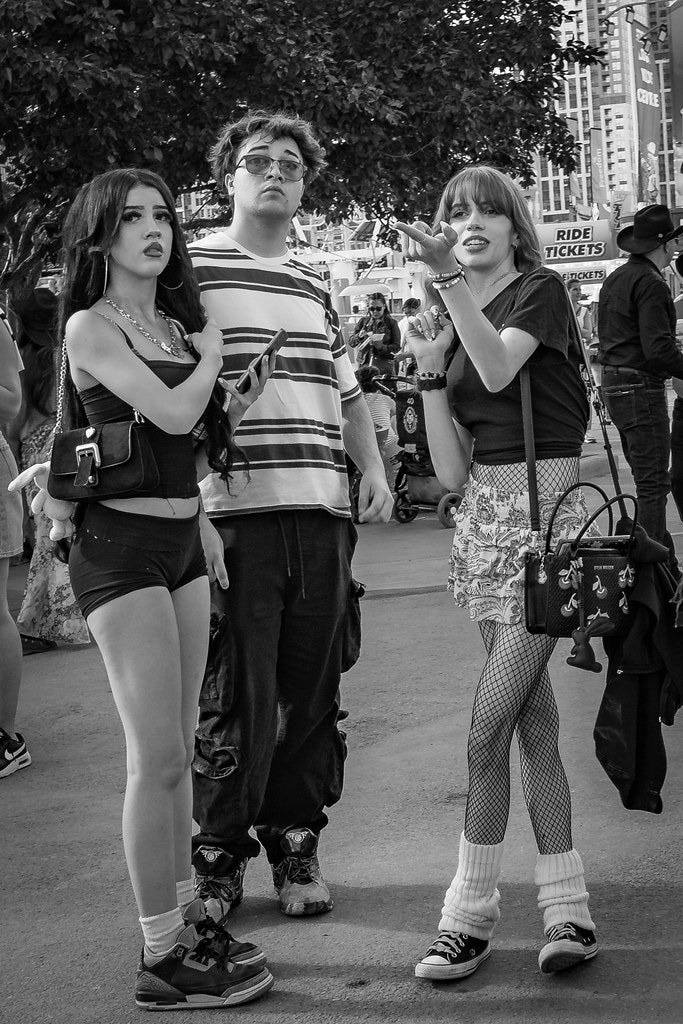
This isn’t always a conscious choice while I'm working. The subconscious is often in the driver's seat. It is only later, while editing, sequencing and living with the work, that many of those ideas are discovered. Certain gestures seem to repeat themselves. Relationships start to matter more than individuals. What first appeared to be isolated depictions of people gradually begins to feel like a description of the culture they inhabit.
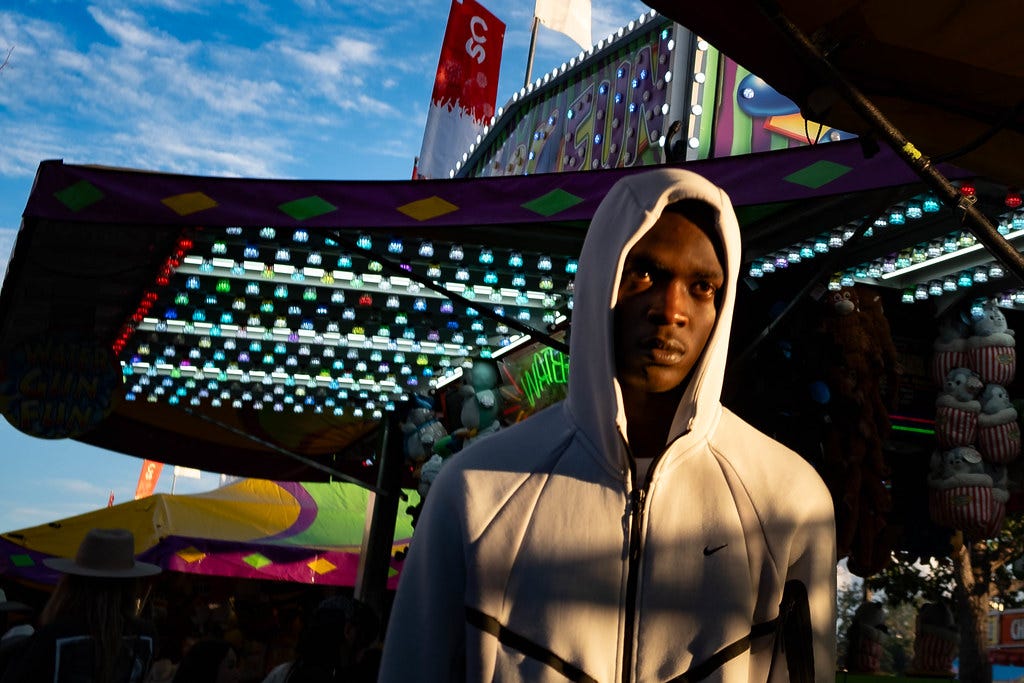
I will always think of myself as a photographer before anything else. The photograph has to succeed on its own terms before it can ask anything more of the viewer. I’m interested in making photographs that can sustain a second reading—one that moves beyond the formal arrangement of people within a frame and begins to ask what those arrangements reveal about us. Not just about the Stampede, but about the small rituals through which we express family, friendship, celebration and belonging.
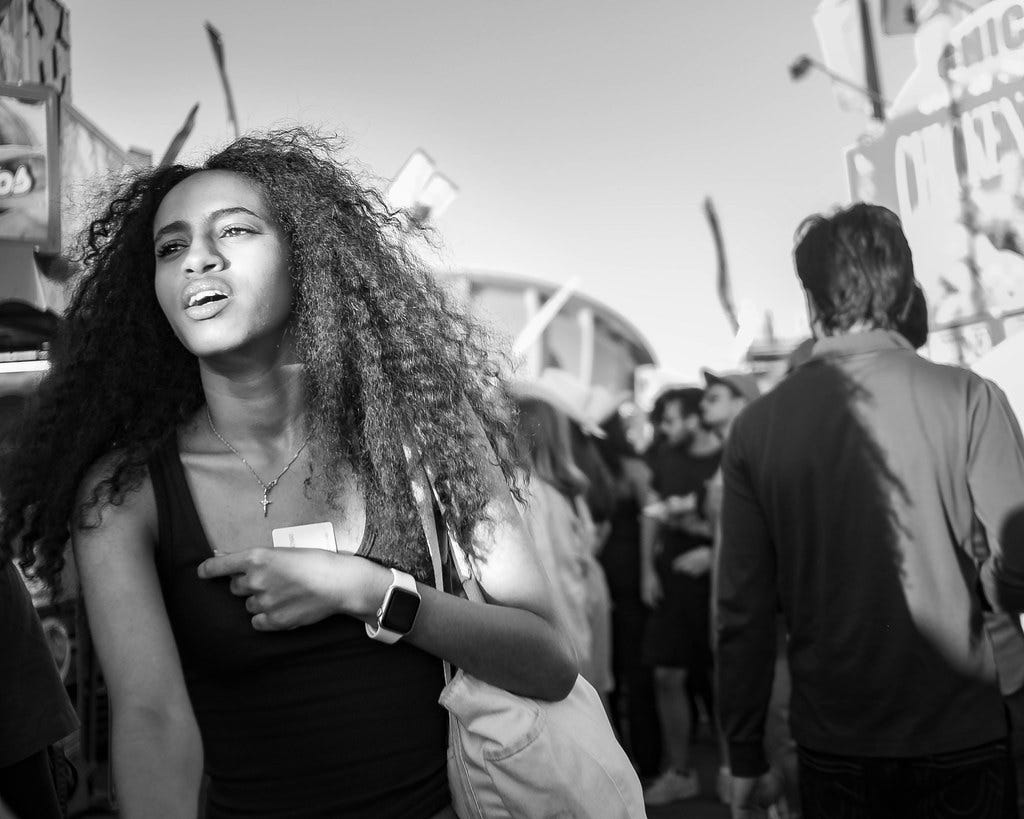
Ten years ago I was trying to make interesting photographs on the midway.
Today, I still am.
This was only the first year of working from this new perspective, and it will take time to see where it leads. My curiosity has begun to outgrow the frame, though, and that feels like a worthy itch to scratch.
-Ward, Calgary
Do these ideas resonate with you? Have you noticed your own work changing in unexpected ways over time? I'd love to hear your thoughts.
Antonio and I talked about this experience in our Street Shots Photography Podcast called:
If you'd like to see more of this work, please have a look at my Instagram. I have a rodeo gallery on my website. I also sell fine prints and I'd be happy to arrange a print of any of the photographs in my galleries.
What a great post. I think what you’re describing is something that happens for me when I really dive deep into a subject over a long period of time. You’ve made the obvious photographs (not a pejorative… meaning - the photographs of subjects that you’re initially drawn to) and the more you keep at it, the more you start to notice. And the more you notice, the more rich the photographs get. I think that richness comes not from any particular photographic process or approach, but rather from inside yourself. Your interest in, knowledge of, research on the subject starts to create a synergy and the photographs get deeper and richer because of it.